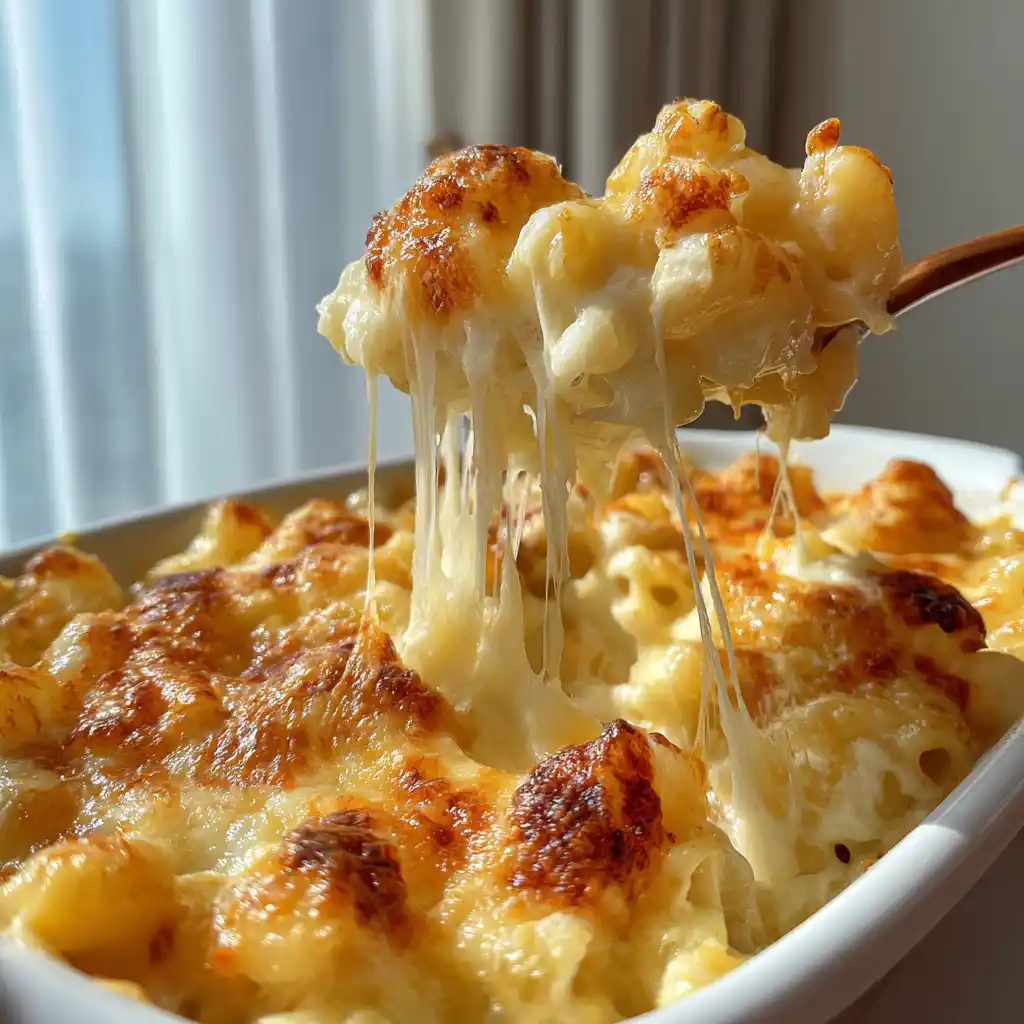
Not the box. Not even close to the box. This homemade mac and cheese is the one with the sauce that coats every single piece of pasta, the golden breadcrumb crust that shatters at the first tap of a spoon, and that deep, complex cheese flavor that makes people ask what’s in it. The answer is a proper béchamel, three cheeses, and one technique that keeps the sauce silky smooth instead of grainy and broken. Thirty minutes. One pot, one baking dish. The most comforting thing you will eat all week.
Why you’ll love this homemade mac and cheese
- ✦ Ultra-creamy sauce that coats every pasta shape and never breaks
- ✦ Golden breadcrumb crust that shatters under the spoon
- ✦ Three-cheese blend for depth, melt and sharpness
- ✦ Ready in 30 minutes, the ultimate comfort food for any night
Ingredients for 6 people
For the pasta:
- 400 g (14 oz) elbow macaroni or cavatappi
- Generously salted boiling water
For the cheese sauce:
- 60 g (4 tbsp) unsalted butter
- 60 g (½ cup) all-purpose flour
- 800 ml (3⅓ cups) whole milk, warmed
- 200 ml (¾ cup) heavy cream
- 200 g (2 cups) sharp cheddar, freshly grated
- 100 g (1 cup) gruyère or comté, freshly grated
- 80 g (¾ cup) parmesan, freshly grated
- 1 tsp Dijon mustard
- ½ tsp smoked paprika
- ¼ tsp freshly grated nutmeg
- Salt and freshly ground black pepper
For the breadcrumb crust:
- 80 g (1 cup) panko breadcrumbs
- 30 g (2 tbsp) unsalted butter, melted
- 30 g (¼ cup) parmesan, finely grated
- ½ tsp smoked paprika
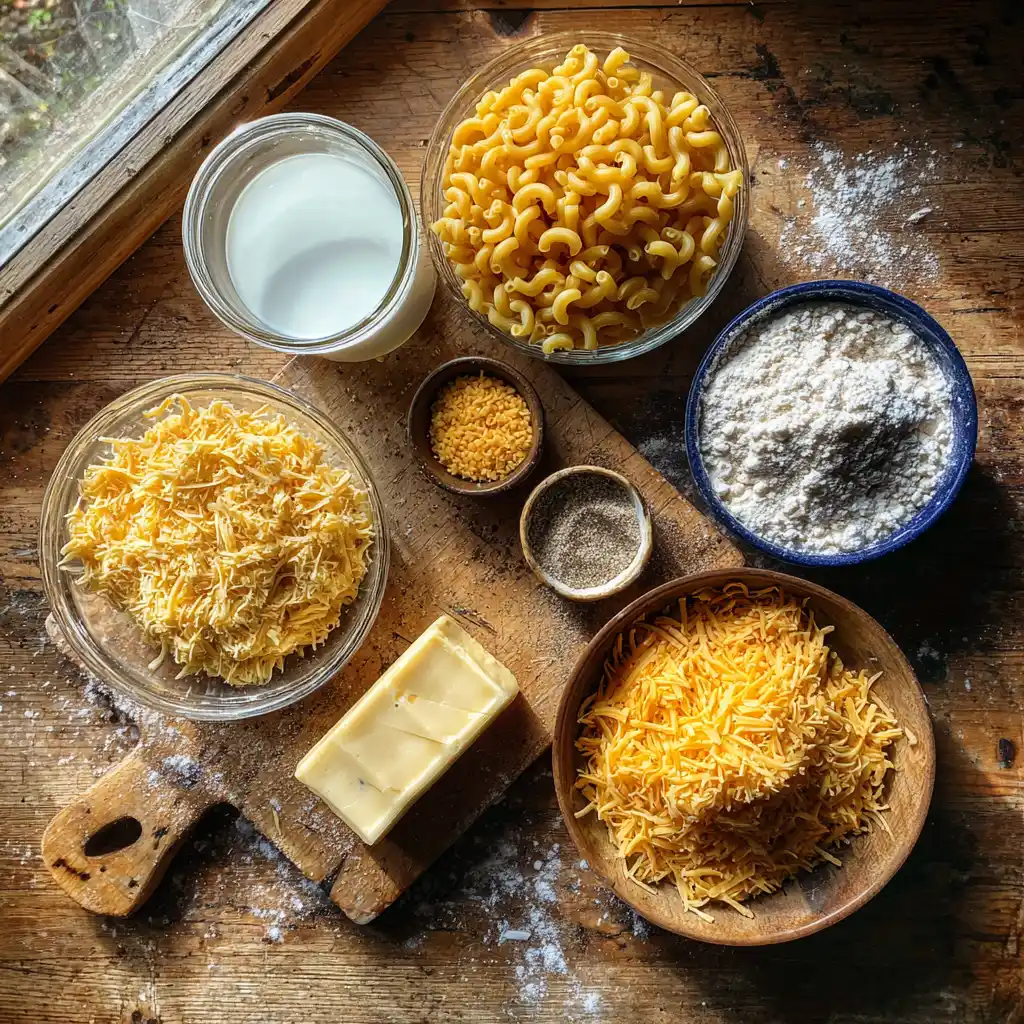
Grate your own cheese: pre-shredded cheese from a bag contains cellulose and anti-caking agents that prevent the cheese from melting smoothly into the sauce. They make it grainy and stringy instead of silky. Grating your own takes 3 extra minutes and makes a difference you will taste immediately in the texture of the finished sauce. This is the single most impactful upgrade you can make to this recipe.
Step-by-step homemade mac and cheese
Cook the pasta: two minutes under al dente
Cook the pasta in heavily salted boiling water for 2 minutes less than the package directions. The pasta will finish cooking in the oven and absorbs sauce as it bakes. Overcooked pasta going into a hot oven becomes mushy. Drain but do not rinse. The starch on the surface of the pasta helps the sauce cling. Reserve 1 cup of pasta water before draining in case you need to loosen the sauce later.
Make the béchamel: the foundation of the sauce
In a large heavy saucepan, melt the butter over medium heat. Add the flour all at once and whisk constantly for 2 minutes until the mixture smells slightly nutty and looks pale golden. This is the roux, and cooking it for the full 2 minutes eliminates the raw flour taste that haunts under-cooked béchamel. Add the warm milk in a slow, steady stream, whisking without stopping. When all the milk is incorporated, add the cream. Cook over medium heat, stirring frequently, until the sauce thickens enough to coat the back of a spoon, about 5 minutes.
Warm milk for a lump-free béchamel: cold milk poured into a hot roux creates lumps that are difficult to whisk out. Warming the milk first, either on the stove or in the microwave for 2 minutes, allows it to incorporate smoothly and creates a silky sauce in half the time. This is the most commonly skipped step and the most commonly blamed for lumpy results.
Add the cheese: off the heat, always
Remove the saucepan from the heat completely before adding any cheese. This is the critical step. Cheese melted into a sauce that is still boiling seizes: the proteins tighten, the fat separates and the sauce becomes grainy and oily. Off the heat, add the cheddar, gruyère and parmesan in two additions, stirring between each until fully melted and smooth. Add the mustard, smoked paprika, nutmeg, salt and pepper. The mustard does not make the sauce taste like mustard: it amplifies the cheese flavor and adds a subtle background sharpness that transforms the sauce.
The off-heat rule: there is no exception to this. If your sauce looks smooth in the pan but grainy after the cheese is added, the pan was too hot. You can sometimes rescue a grainy sauce by adding a splash of warm milk and whisking vigorously off the heat, but prevention is far easier. Remove the pan, count to 30, then add the cheese.
Combine, top and bake: the golden finish
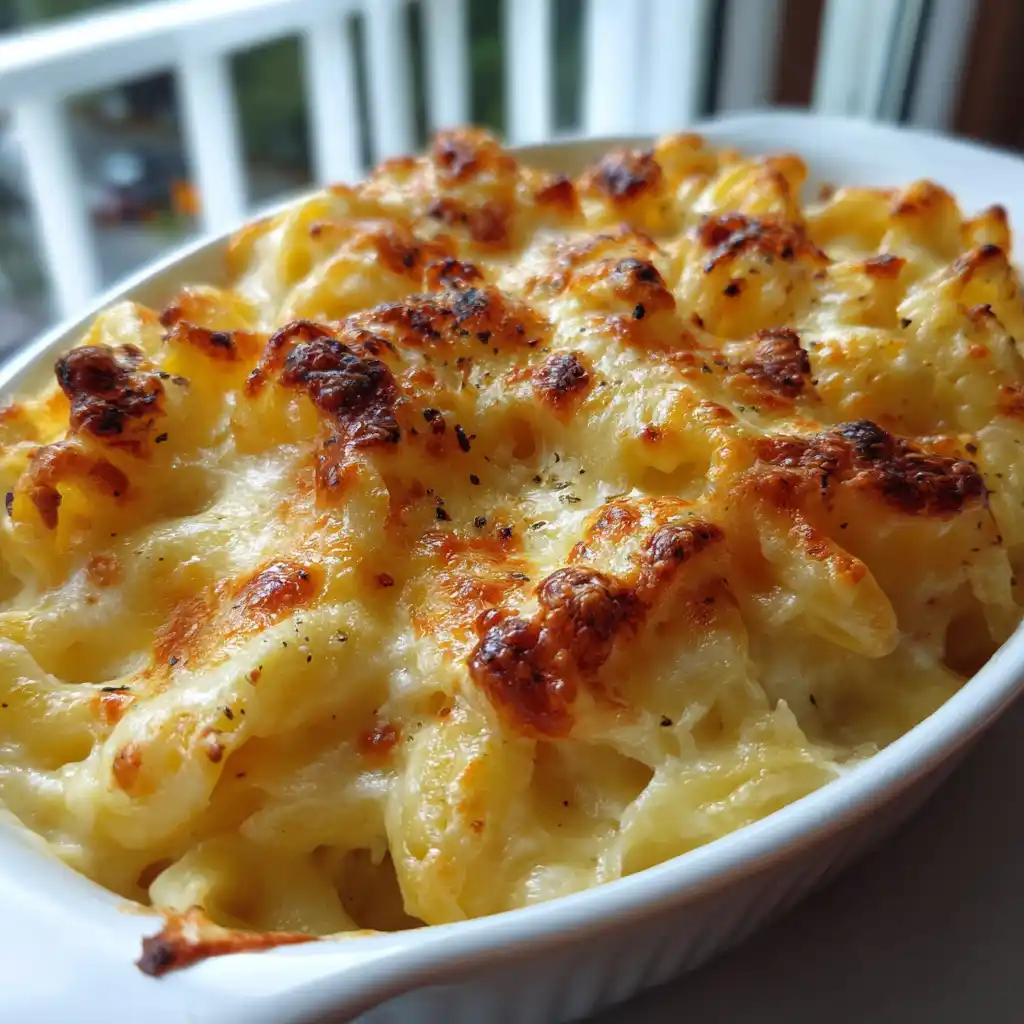
Preheat the oven to 200°C / 400°F. Fold the drained pasta into the cheese sauce until every piece is coated. If the sauce seems very thick, add a splash of the reserved pasta water. Pour into a large buttered baking dish. Mix the panko breadcrumbs with the melted butter, grated parmesan and smoked paprika. Scatter evenly over the top. Bake for 20 to 25 minutes until the sauce is bubbling at the edges and the breadcrumb crust is deep golden and crispy. Rest 5 minutes before serving.
Tips for perfect homemade mac and cheese
The 3 golden rules
- Always grate your own cheese: pre-shredded bags contain anti-caking agents that make the sauce grainy.
- Add cheese off the heat: this single rule separates silky sauce from broken, grainy sauce.
- Undercook the pasta by 2 minutes: it finishes in the oven and the texture will be perfect.
Delicious variations
- Bacon jalapeño mac and cheese: fold 150 g of crispy diced bacon and 1 diced pickled jalapeño into the pasta before baking. The smoky, spicy contrast against the creamy sauce is the most popular variation for a reason.
- Truffle mac and cheese: add 1 teaspoon of truffle oil to the finished cheese sauce before combining with the pasta and replace the panko crust with finely grated parmesan only. The result is elegant enough for a dinner party and still deeply comforting.
Frequently asked questions
Why is my mac and cheese sauce grainy?
The most common cause is adding cheese to a sauce that was still too hot. The heat causes the proteins to tighten and separate from the fat. Always remove the pan completely from the heat before adding cheese, and wait 30 seconds. Pre-shredded cheese with anti-caking agents is the second most common cause. If your sauce has already gone grainy, whisk in a tablespoon of warm cream off the heat. It does not always fully recover but significantly improves the texture.
Can you make mac and cheese ahead of time?
Yes. Assemble the entire dish including the breadcrumb topping, cover tightly with plastic wrap and refrigerate for up to 2 days. When ready to bake, remove from the fridge 30 minutes before and bake at 190°C for 30 to 35 minutes, slightly longer than fresh since the dish starts cold. The sauce may be slightly thicker after refrigerating: add a splash of milk before covering and baking to compensate.
What is the best cheese combination for mac and cheese?
The most reliable combination balances melt, flavor and sharpness. Sharp cheddar provides the classic flavor and orange color. Gruyère or comté adds nuttiness and superior melt. Parmesan brings saltiness and depth. For maximum melt without graininess, always include at least one high-moisture cheese like cheddar or fontina. Avoid very dry aged cheeses like aged parmesan or pecorino as the primary cheese: they do not melt smoothly enough on their own.